
What are Rocks?
Rocks make up the majority of the Earth’s crust. A rock is a mixture of minerals (chemical compounds). A rock may be made up of one or more minerals. For example limestone is only made of only one mineral called calcite whereas granite is composed of quartz, mica and feldspar.
There are many types of rocks and geologists have classified them based on the process by which they are formed.
The three groups in which rocks are classified are:
- Igneous
- Sedimentary
- Metamorphic
Igneous Rocks
The word igneous is derived from the Latin word ‘ignis’, meaning fire. They are given this name because these rocks are formed when hot molten material cools down.
Deep inside the Earth the temperature is high enough to melt rock. This molten rock is called magma and rises through cracks in the Earth’s crust. When the magma cools it solidifies to form igneous rock. Igneous rocks are classified into two groups depending on the way the magma cools and solidifies.
- Intrusive Igneous Rock and
- Extrusive Igneous Rock
The animation below shows the formation of intrusive and extrusive igneous rocks.
The table below summarises the two types of Igneous Rocks:
| Intrusive Igneous Rock | Extrusive Igneous Rock |
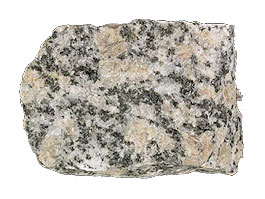
| When the molten rock (magma) cools and solidifies before it reaches the surface it forms intrusive igneous rock. Intrusive igneous rocks cool slowly and form very large crystals. Intrusive rocks become exposed on the Earth’s surface when overlying material is eroded away. | When molten rock is thrown out by the eruptions of volcanoes it forms an extrusive igneous rock. Extrusive igneous rocks cool rapidly and form small crystals. |
 |
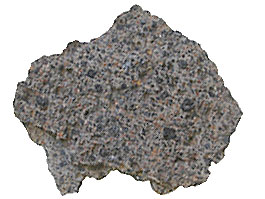 |
| Granite is an example of an intrusive igneous rock. | Basalt is an example of an extrusive igneous rock. |