
Sedimentary Rocks
Rocks are exposed to the forces of nature. They are broken down by the action of wind, water (rain, river and waves), ice (glaciers), temperature changes and gravity (rocks falling from height). The small pieces of rock are washed into rivers and transported to lakes or the sea. Here the rocks settle to the bottom and are called sediments. When the rock settles it is soft and loose, but over time more layers of rock settle on top. As the layers build up the overlying weight squeezes the material closer together, this process is called compaction. Dissolved minerals precipitate out and settle around the grains and forms a cement that glues the grains together, this is known as cementation.
Examples of Sedimentary Rocks
| Limestone | Shale |
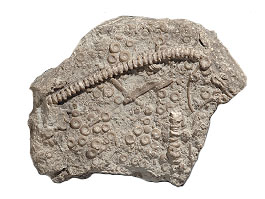 |
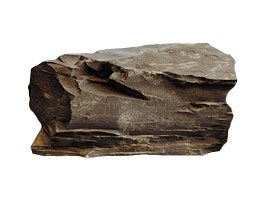 |
| Limestone is a sedimentary rock formed from the mineral calcite a form of calcium carbonate. Sedimentary rocks contain the fossils of animals and plants. When animals or plants die their skeletons fall onto the seabed and get trapped in the layers of sediment. | Shale is the most abundant sedimentary rock on the Earth’s crust. |